A good vocal harmony plugin does more than duplicate a voice at a fixed interval. The music changes underneath the melody, so a third above is sometimes major, sometimes minor, and sometimes not in the chord at all. Scale-aware and MIDI-driven harmonisers follow that context. Ordinary pitch shifters do not, and that single distinction is most of what separates the tools below.
Quick answer: Waves Harmony for large arranged stacks, NEOTUNE Pro at $29.99 if you want two well-controlled voices in the same window that tunes the lead, VocalSynth 2 when the harmony is meant to sound designed, OVox when it should behave like a synth.
Disclosure: ProducerSources makes NEOTUNE Pro and sells several of the other plugins compared here. Prices were checked on September 26, 2026 and change often. Our ranking criteria are stated in full so you can weigh them yourself.
How these are ranked
Four things decide whether a harmony plugin is useful, and price is not one of them until the end.
- Scale awareness. Does it know the key, and does it pick major or minor thirds accordingly?
- MIDI control. Can you play the exact harmony notes, which is the only way to be certain against a specific chord?
- Per-voice shaping. Formant, pan, level, timing offset. Without these, every voice shares one throat and the stack sounds like one person.
- Where it sits in your session. A harmoniser that also tunes the lead removes an insert. A harmoniser inside a suite you already own removes a purchase.
Quick comparison
Price checked September 26, 2026.
| Plugin | Best for | Voices and approach | MIDI | Price at check |
|---|---|---|---|---|
| NEOTUNE Pro | Tuning and harmony in one window | 2 scale-aware voices, doubler, unison | Chord lock | $29.99 |
| Waves Harmony | Large arranged stacks | Up to 8 voices | Yes | $39.99 Waves, $34.99 ProducerSources |
| Auto-Tune Pro 11 | Existing Antares workflows | 4-part Harmony Player | Yes | $450 on ProducerSources |
| iZotope VocalSynth 2 | Designed and robotic harmony | Polyvox plus four engines | Yes | $199 |
| Waves OVox | Voice-controlled synth harmony | 8 synth voices | Yes, plus MIDI out | $99 list, sales vary |
| iZotope Nectar 4 Advanced | A full vocal mixing suite | Voices module | Workflow dependent | $299 |
| Auburn Sounds Graillon 3 | Learning the workflow cheaply | Pitch voices and effects | Setup dependent | Free, $29 full |
Scale-aware versus parallel shifting
This is the concept worth understanding before you spend anything.
A parallel shifter moves every note by a fixed number of semitones. Ask for “a third above” and it gives you four semitones on every note, always. Over a progression that moves between major and minor chords, roughly half of those intervals will be wrong, and they will be wrong in the specific way that sounds like a mistake rather than a choice.
A scale-aware harmoniser knows the key, so “a third above” becomes four semitones on some degrees and three on others. The line stays diatonic.
MIDI control goes further and removes the guessing entirely: you play the harmony notes, so they are right against that specific chord including borrowed and passing chords the scale does not describe.
For a simple diatonic hook, scale-aware is enough. For anything with secondary dominants or modal interchange, use MIDI.
1. NEOTUNE Pro – best compact all-in-one
NEOTUNE Pro generates two scale-aware harmony voices inside the same plugin that cleans and tunes the lead. That order matters more than it sounds: the harmoniser is analysing a signal that has already been high-passed, de-hummed and corrected, so the pitch information it works from is as clean as it gets.
Alongside the two voices there is a doubler, a unison spread and octave up and down, plus formant shifting to 12 semitones for making each layer a different size, vibrato with onset delay, talkbox, drive and growl, and MIDI with chord lock and glide.
The 37 scales matter here too. Because the harmony targets follow the same scale engine as the correction, a harmony line in a maqam or a microtonal scale lands on the same intervals as the lead. Very few harmonisers can do that.
It is not the voice-count winner. Two voices plus a doubler is not eight. Choose it when two well-shaped parts are worth more than eight loosely controlled ones, and when removing an insert from the chain has value.
$29.99, one payment, one machine at a time and moveable from your account.
See NEOTUNE Pro
2. Waves Harmony – best for large arrangements
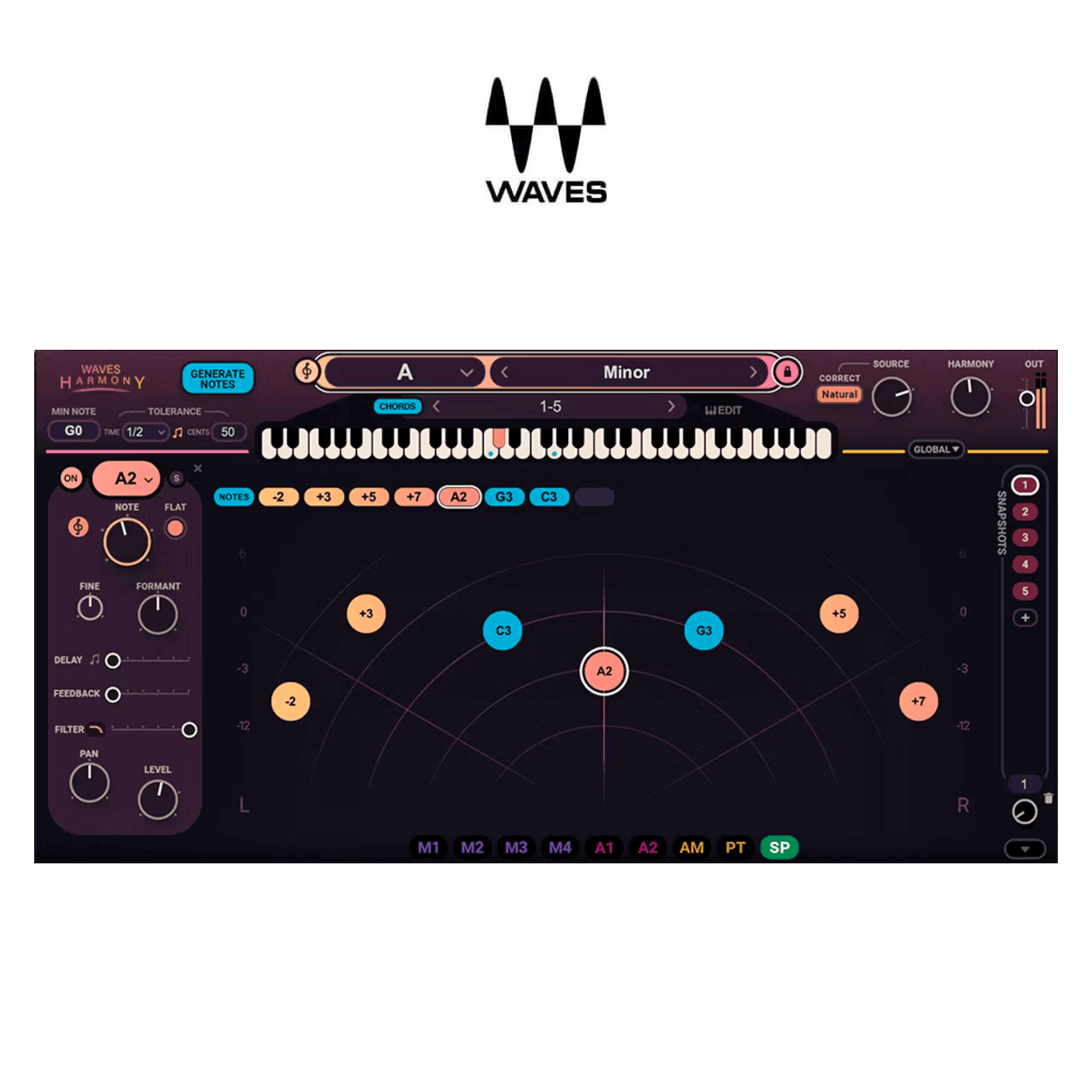
Up to eight voices, with automatic, MIDI and graphical workflows, and per-voice control of pitch, formant, pan, delay, filtering and modulation.
This is the strongest tool here for drawing a detailed stack without recording eight performers. The per-voice delay and formant controls are the important part: they are what stop eight voices sounding like one voice octupled.
$39.99 on Waves and $34.99 on ProducerSources at the check date, which makes it remarkable value for what it does. Waves Harmony on ProducerSources
3. Auto-Tune Pro 11 – best inside the Antares workflow
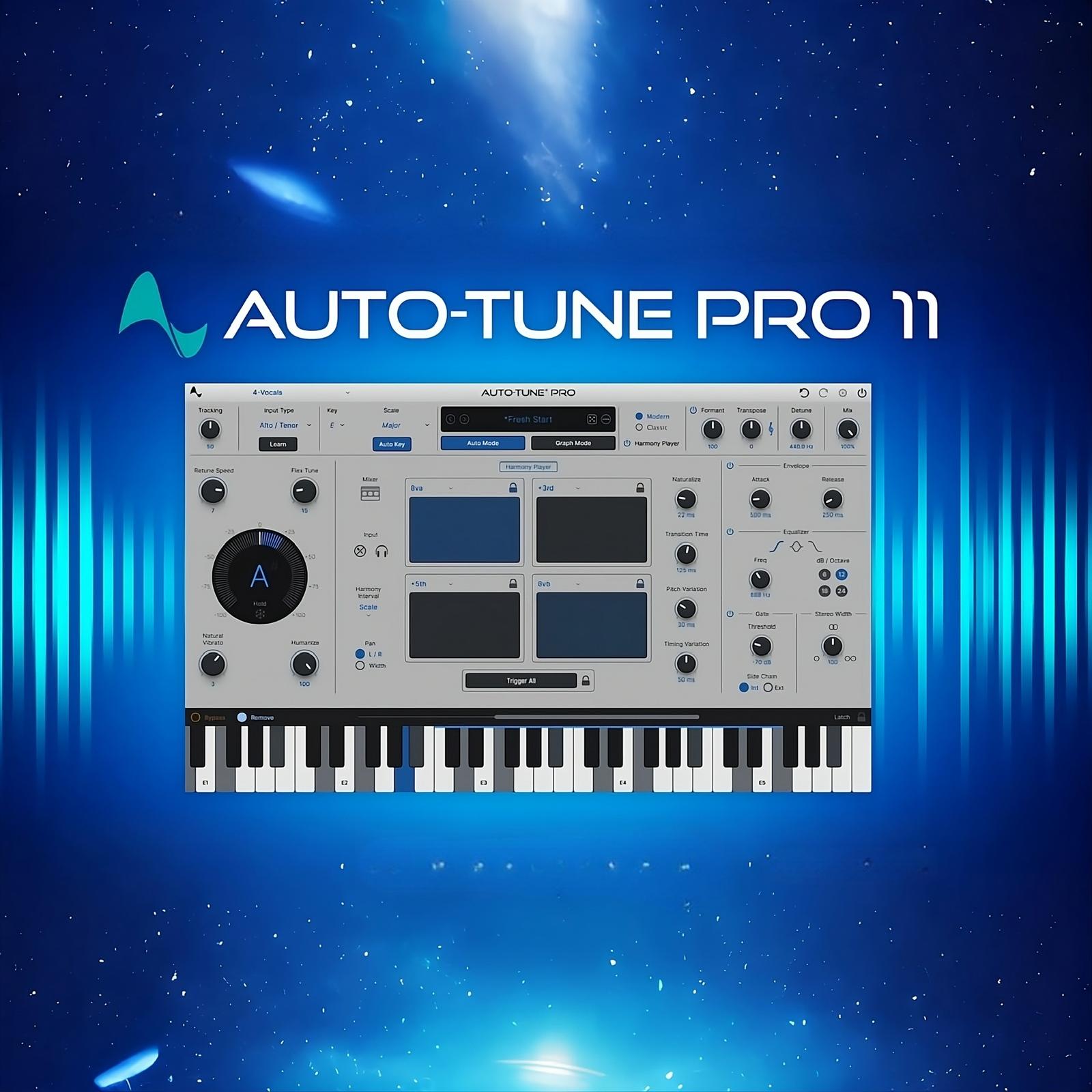
The four-part Harmony Player gives per-voice formant, pan and level plus master processing, and its real advantage is proximity: it sits next to Auto Mode and Graph Mode in a workflow many studios already run.
At $450 on the ProducerSources page it is expensive if harmony is the only thing you need. It makes sense as part of the whole Antares picture, not as a harmoniser purchase. Auto-Tune Pro on ProducerSources
4. iZotope VocalSynth 2 – best for obvious vocal design
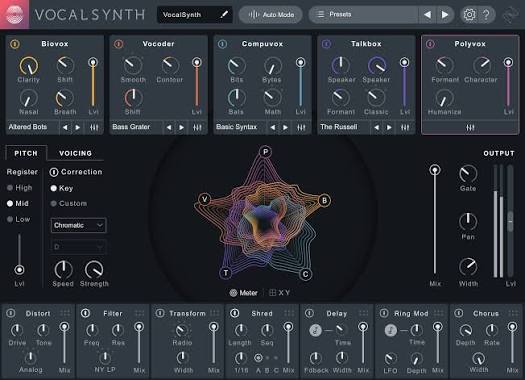
Polyvox generates the additional voices, and Talkbox, Vocoder, Compuvox and Biovox turn the stack into sound design rather than backing vocals.
Choose it when artificial character is the point. Do not choose it when the brief is “three invisible backing singers”, because it is not really trying to do that and the $199 buys you capability you would be bypassing.
5. Waves OVox – best voice-controlled synth
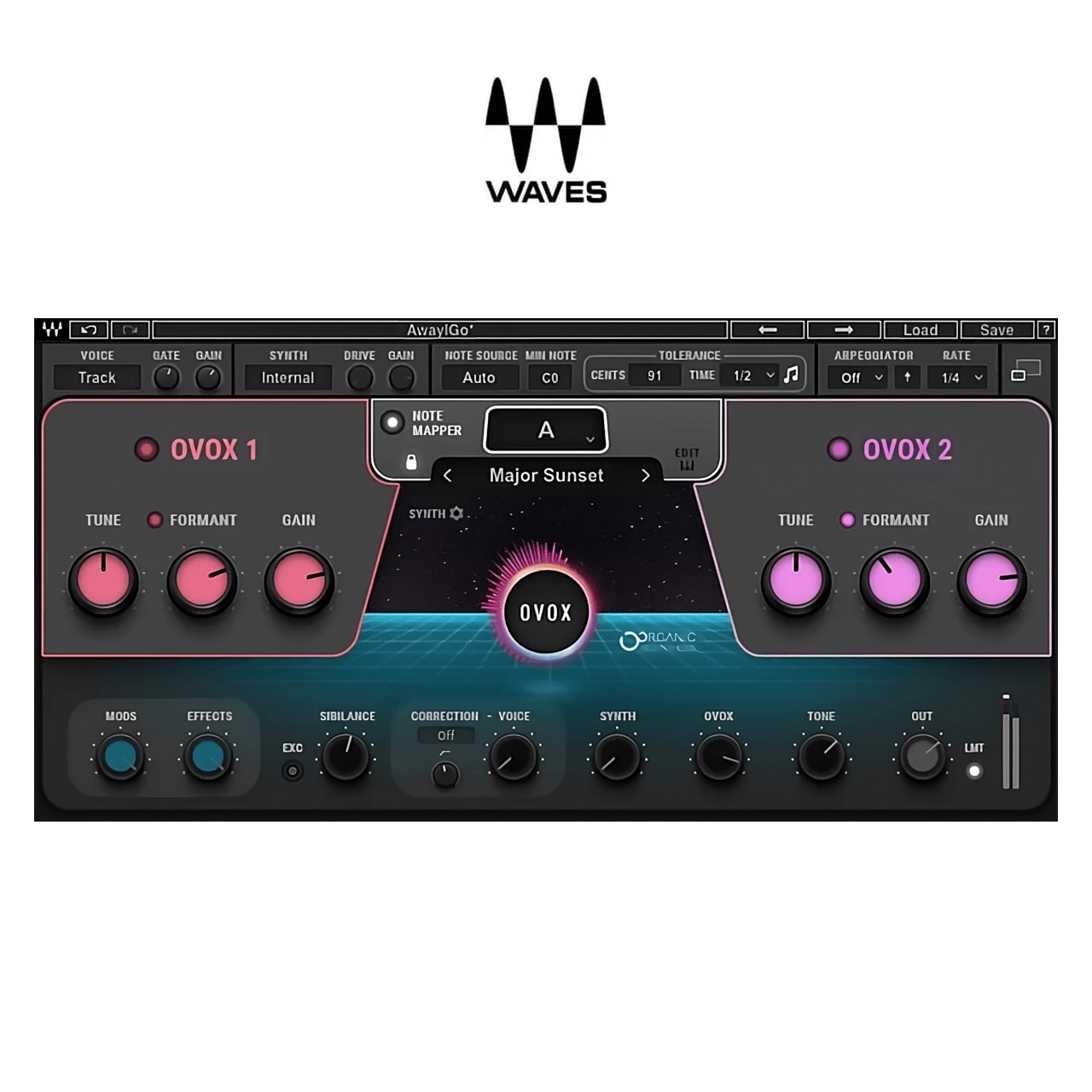
OVox analyses pitch, amplitude and formant from the voice, then maps them onto two synthesis engines across eight voices. Note Mapper, MIDI in, arpeggiation and MIDI out make it closer to a playable vocal instrument than a backing-vocal generator.
If the harmony should sound like a synth being driven by a voice rather than like extra singers, this is the one. OVox on ProducerSources
6. iZotope Nectar 4 Advanced – best broader vocal suite
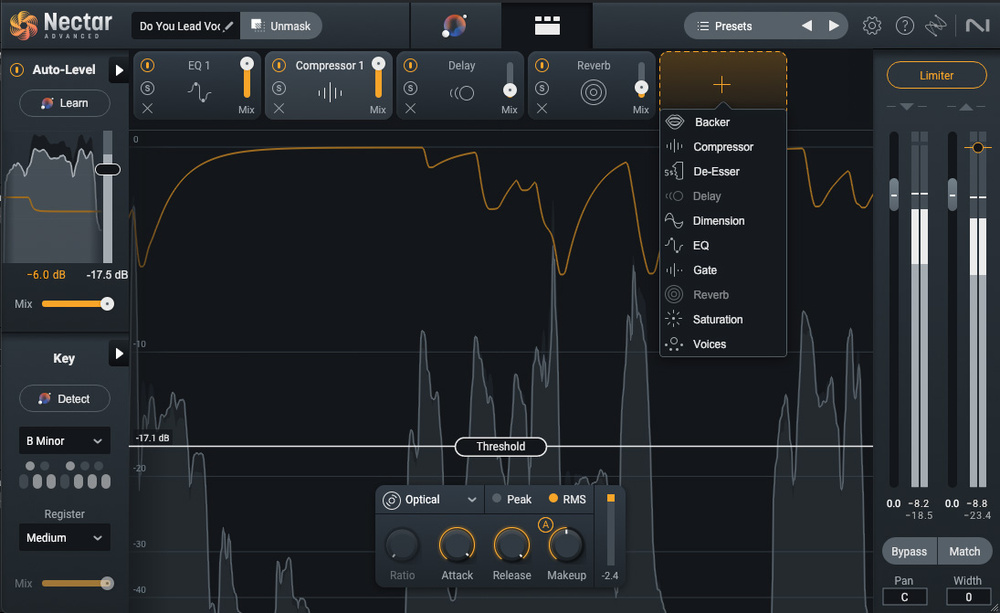
Nectar combines full vocal mixing with generated voices inside an assistant-driven environment. A logical choice if you already work in iZotope and want one window for the whole vocal.
$299 is difficult to justify for harmony alone.
7. Auburn Sounds Graillon 3 – best budget experiment
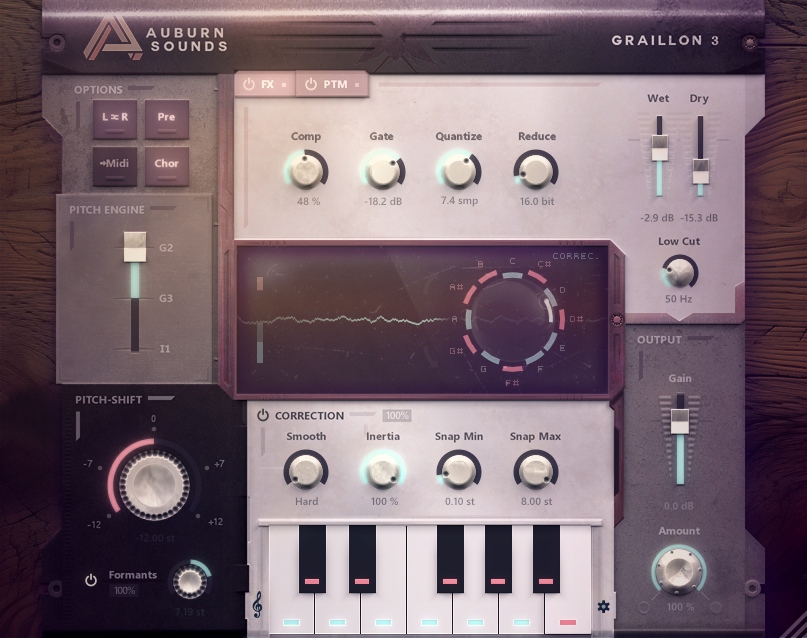
Correction, shifting and creative voice tools free, or $29 for the full edition. Use it to learn whether you actually want a dedicated multi-voice arranger before buying one.
How to make generated harmonies believable
This section is worth more than the plugin choice. Most bad generated harmony is a settings problem, not a software problem.
Use fewer voices. Two well-placed voices beat six. Six voices from one source is six copies of the same throat, and your ear hears the duplication before it hears the chord.
Offset the timing. 10 to 30 ms of delay per voice. Real singers do not start together. This one change does more than everything else combined.
Vary the level. Not by much. 1 to 2 dB between voices.
Pan away from the lead. Keep the lead centred and put the harmony wide.
Shift the formants slightly. A semitone or two, different per voice, so each layer is a slightly different sized person.
High-pass the backing parts. 150 to 250 Hz. They do not need low end, and removing it stops the stack crowding the lead.
Control the sibilance. Every generated voice duplicates the consonants. Six copies of the same S is a problem you can hear from the next room. De-ess the harmony bus harder than you would a lead.
Automate the phrases. Real backing singers do not sing every word of every line. Bring the harmony in on the last two bars of the phrase and out again. This is the difference between “harmony plugin” and “arrangement”.
Common failures
The harmony clashes on some chords. Parallel shifting, or the wrong key. Switch to scale-aware, or drive it from MIDI.
It sounds like one person multiplied. No timing offset and no formant variation. Fix those two before adding voices.
The consonants are a mess. Sibilance multiplied across voices. De-ess the harmony bus.
The stack buries the lead. High-pass the harmony and pull it 6 to 10 dB under. Harmony is meant to be felt more than heard.
The harmony tracks badly on low notes. Detection range. Set it to the singer’s register.
Frequently asked questions
What is the best vocal harmony plugin in 2026? Waves Harmony for large arranged stacks, NEOTUNE Pro at $29.99 for two well-controlled voices alongside correction in one window, VocalSynth 2 when the harmony should sound designed rather than sung.
Is a harmoniser the same as doubling? No. Doubling reinforces the same melody, harmony adds different notes. Most harmonisers can do both, and NEOTUNE Pro has a separate doubler for exactly that reason.
Do I need to know music theory to use one? Automatic scale modes will get you a usable part from just the key. MIDI control gives better chord-specific results but needs you to know the progression.
Can a pitch shifter create harmony? It can create a fixed interval, which will be wrong on roughly half the chords in a normal progression. Use scale-aware or MIDI-driven processing.
How many harmony voices should I use? Fewer than you think. Two well-placed and differently shaped voices sound more real than six identical ones.
Why do my generated harmonies sound fake? Almost always no timing offset and no formant variation between voices. Add 10 to 30 ms of delay per voice and shift each voice’s formants by a semitone or two.
Should I tune the lead before harmonising it? Yes. The harmoniser derives its pitch from the lead, so a clean corrected lead produces more stable harmony.
Is Waves Harmony better than Auto-Tune’s Harmony Player? For harmony alone, Waves Harmony offers more voices and more per-voice control at a far lower price. Auto-Tune’s advantage is being inside a workflow you may already use.
NEOTUNE Pro puts two scale-aware harmony voices, a doubler, unison spread and octaves in the same window as the correction and the clean-up, across all 37 scales. $29.99. See the plugin.
Related: talkbox plugins and formant shifting explained.
Also: autotune settings for rap vocals for where harmony sits in a rap arrangement, and how to mix trap vocals for the chain around it.
The post 7 Best Vocal Harmony Plugins in 2026 appeared first on Producer Sources.