If you make a genre like jungle, IDM or breakcore, you need a tracker. These are the five best trackers available, plus how to bring one into your workflow.
We’re all familiar with the traditional DAW sequencer, which scrolls along a timeline from left to right. Most major DAWs use some kind of horizontal sequencer, with note information represented as blocks on a piano roll, but this is not the only game in town. Trackers provide a novel alternative, one that displays note and parameter information as numbers, and proceeds vertically, tumbling from the top of the screen down.
Trackers may seem confounding from the outside, but depending on your chosen genre or production style, they may provide a useful alternative to software like Ableton Live, either as a companion or wholesale replacement.
Let’s take a look at five of the best trackers available today, in both software and hardware formats, and explore how you might bring a tracker into your own productions.
What Is A Tracker?
First, it may be helpful to clarify what a tracker is. Sometimes called a music tracker, a tracker is a sequencer that uses numbers to represent note, parameter and effect changes, with columns representing instruments and lines corresponding to note divisions.
The first tracker was Ultimate Soundtracker, released for the Commodore Amiga in 1987. This soon became the software of choice for the demoscene, with hackers creating cracktros – introduction music for their cracked software – with it.
The best-known tracker, however, is OctaMED, which went through a few different iterations over its lifetime. The software was particularly popular with jungle producers like DJ Aphrodte, Bizzy B and DJ Zinc, as well as breakcore don Venetian Snares in his earlier days. Producer Pete Cannon still makes use of the software.
Because of the structure of the tracker sequencer, it’s extremely easy to create pitch rolls, volume swells and other quick changes typical of genres like jungle and IDM. Aphex Twin didn’t start out on a tracker, but Drukqs, arguably the most Aphex record he did, was made with a tracker called PlayerPro.
Five of the Best Trackers
Given that trackers started within computer culture, it’s possible to run emulations of classic trackers like OctaMED on modern computers. If you’re really serious about old-school production methods, you can do like Pete Cannon and work with actual vintage Amigas. But for most of us, a modern tracker will be much easier to get started with.
Here are five of the best that you can get right now. They’re organized in order of ascending price, with software first and hardware second.
Alexander Zolotov Sunvox
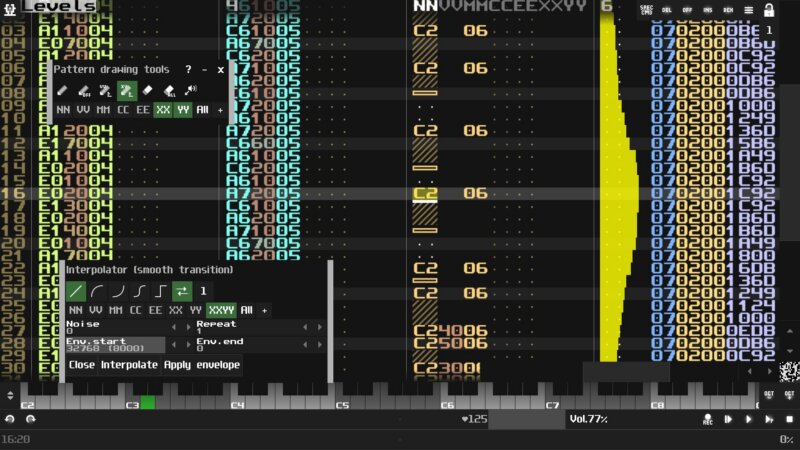
Free on desktop and only $5 for iOS (with AUv3 for Logic and Live included), SunVox from developer Alexander Zolotov is the cheapest way to explore a modern tracker workflow. Originally built in 2008 and based on an underlying freeware engine, SunVox is a modular software synthesizer that also happens to have a tracker sequencer built-in.
Like Reaktor but possibly even nerdier, it features synthesizers with subtractive, FM, sample-based, drum, and additive sound engines, plus effects and utility modules. Hook up the modules in the Module View and sequence them with the Pattern Editor.
Get SunVox and find out more on the developer’s website.
Electronisounds TRX-12
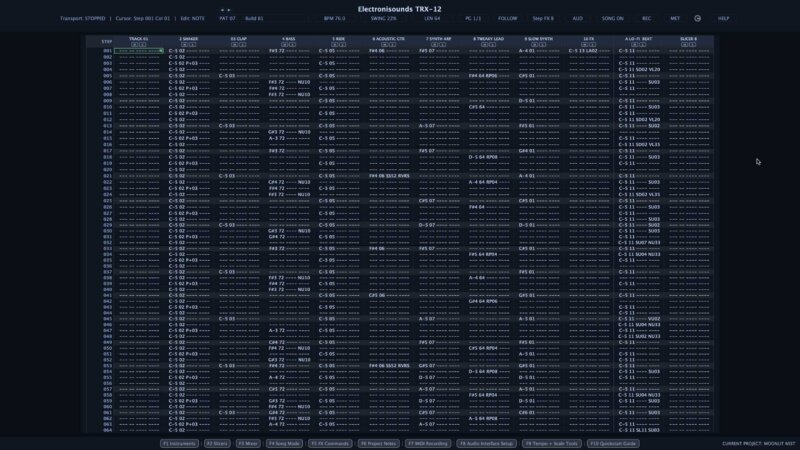
The tracker scene is, by its very nature, grassroots. Born out of hacker culture, trackers are often made by passionate individuals. Dean Daughters of Electronisounds is one such individual, and he’s turned love for the sequencer type into TRX-12, a new self-contained tracker DAW.
TRX-12 does basic notes but it also features 35 step-FX commands. Step-FX are the secret weapons of trackers. These allow you to create per-note ratchets, glides, randomization, and other tricks that would be mind-numbingly tedious to do in a traditional DAW.
TRX-12 includes its own instruments, with three polyphonic synthesizer engines, a multi-sample synth and two dedicated slicer tracks for break chopping. There’s a mixer with per-track sends, sidechain ducking, effects and a mastering chain, and you also get 4GB of sample content to play with. TRX-12 costs $29.99 and is available for Mac and PC.
Find out more at the Electronisounds website.
Renoise
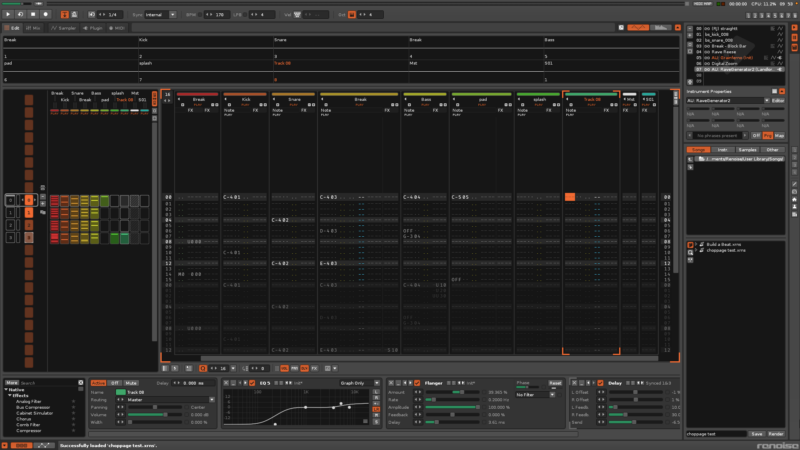
When it comes to modern trackers, Renoise is the reigning king. On the market since 2002 and built by a dedicated team of developers, it’s now up to version 3.5. A fully fledged DAW, it offers plugin support, built-in effects (and very good ones, too), a world-class sample slicer, meta devices for modulation, MIDI, graphical automation, and so on. There are also Tools, which add functionality to the DAW like Max for Live patches do Ableton. When you see videos online of people making music with a tracker, it’s usually Renoise.
Along with its rock-solid coding and deep feature set, Renoise also offers a wealth of educational videos to help you comprehend the tracker workflow. Although the DAW does make concessions to modern music production, it’s still a tracker at heart, and so requires you to know about things like hexadecimal notation. Thankfully, whoever does their tutorials has a knack for explaining things in a clear and easy-to-understand manner.
Renoise is also extremely affordable at only $88. If you want access to the Renoise sampler (including the tracker-based sequencer) but don’t need the full DAW, check out Redux for $56 instead.
Find out more at the Renoise site.
Dirtywave M8
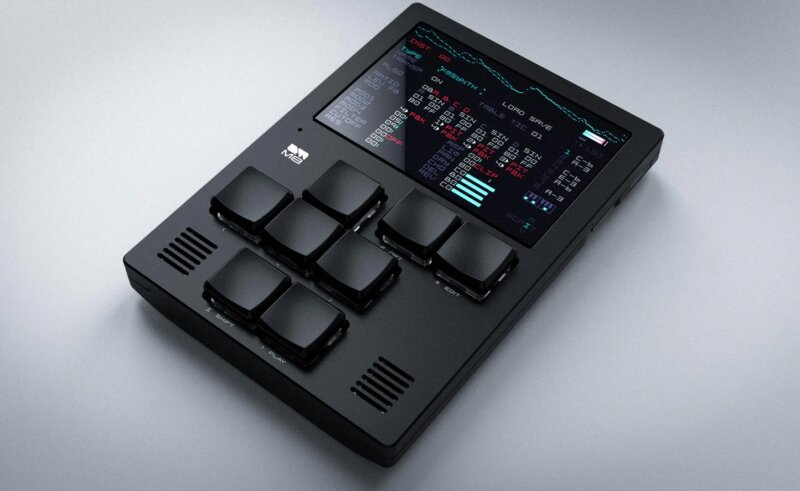
Not every tracker is software-only. Ever since some chiptune fanatics turned their Nintendo Gameboy into a tracker-based sequencer called LSDJ, the idea has been out there. Inspired by that LSDJ, Dirtywave has made M8, a portable tracker in a black box that’s equal parts groovebox and external sequencer.
The sequencer part gives you eight monophonic tracks to work with (tracker channels are traditionally monophonic), 255 patterns, and a song arranger with live mode, while the instrument side includes a chiptune synth, a synthesizer based on Mutable Instruments’ Braids, an FM engine, and a sampler, along with effects.
Being a hardware device, M8 is not going to be as deep as a piece of software like Renoise, but it is a fun and portable way to explore the tracker workflow – and it sounds amazing. The latest Model:02 costs $699.
Find out more at the Dirtywave site.
Polyend Tracker+
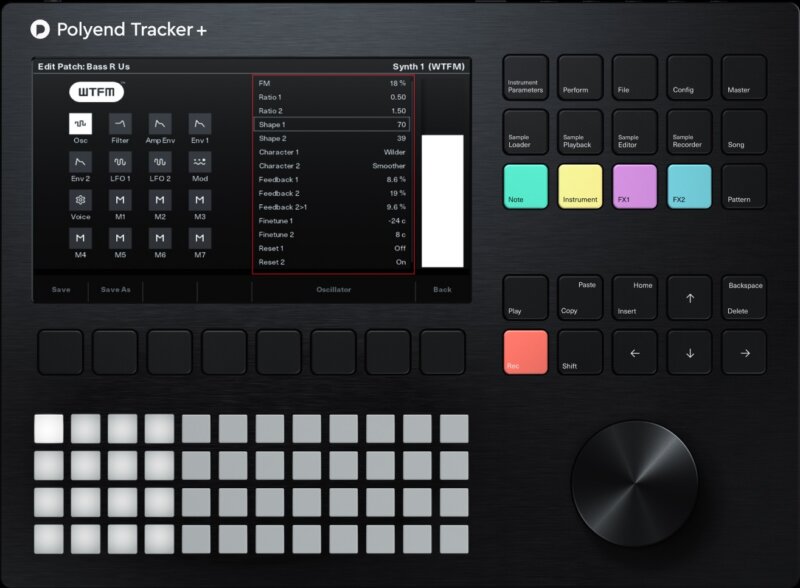
The original official hardware tracker was Polyend’s Tracker. Released in 2020, it brought the horizontal workflow to a groovebox format. That original device has been discontinued, with Tracker+ now replacing it. This beefed-up model offers four synth engines, a drum machine, stereo sampling and a built-in FM radio, plus 16 tracks of sequencing and audio over USB.
If you like the idea of taking your tracker on the go, check out Tracker Mini. Compatible with the bigger Tracker+, the Mini throws in a battery plus an onboard microphone for field sampling. It also replaces some of the controls with a video game-style D-pad, bringing that old-school computer and gaming connection to the forefront.
Tracker+ is $999 while the Tracker Mini will set you back $799.
Get more information on the Polyend site.
Trackers In Use
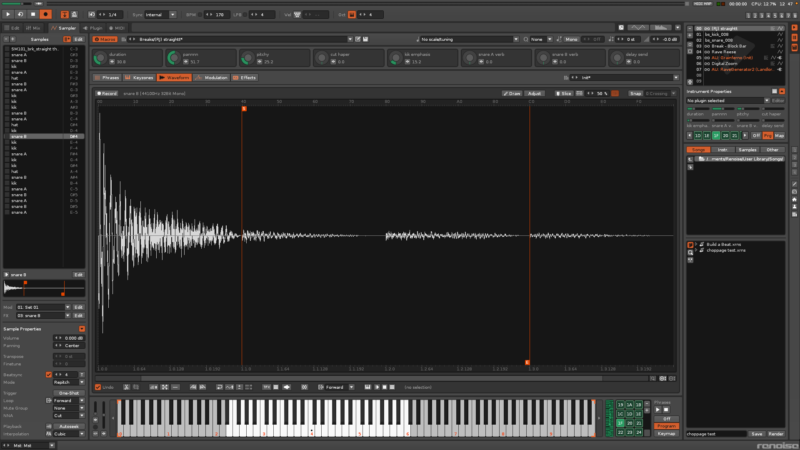
How easy is it to make music with a tracker? It’s honestly not all that hard. There is, of course, a learning curve, but if you approach it like learning any new DAW, you’ll probably find things falling into place pretty quickly. In some ways, trackers are faster than regular DAWs. The focus, at least for something like Renoise, is on the computer keyboard, so you may even find yourself leaving MIDI behind and working entirely with QWERTY keys instead.
Here’s an example of a track we whipped up in Renoise. It’s got two chopped breaks, sampled kick and snare one-shots, and a Reese sample and transition sound, all sourced from sounds that came with the DAW. There’s also Rave Generator 2 in there. The effects are a mix of native ones, both as inserts on tracks and built into the sampler, as well as third-party plugins like FabFilter Pro-Q 4 and D16 Group Frontier.
Renoise jungle:
Lastly, there’s nothing that says you can only do fast-paced music with a tracker. Lots of people do house, techno and other, more straightforward genres with it. It’s whatever you feel most comfortable with.
[social-links heading=”Follow Attack Magazine” facebook=”https://www.facebook.com/attackmag” twitter=”https://twitter.com/attackmag1″ instagram=”https://www.instagram.com/attackmag/” youtube=”https://www.youtube.com/user/attackmag” soundcloud=”https://soundcloud.com/attackmag” tiktok=”https://www.tiktok.com/@attackmagazine”]
[product-collection]