Hyperpop vocal production is not a preset, and looking for one is why most attempts end up sounding like ordinary pop with a distortion plugin on it.
The actual craft is two things: moving musical pitch and vocal formants independently, and arranging several contrasting layers around a core that stays clean and rhythmically exact. The extreme processing works precisely because something underneath it is not extreme.
Quick answer: tune hard first (100% correction, 0-10 ms, restricted scale), then transform. Stack a neutral hard-tuned lead, a +12 semitone high-passed sheen, a -12 weight layer and a formant-shifted character double. Distort in parallel, never before the tuner.
The core chain
| Stage | Purpose | Typical move |
|---|---|---|
| Edit | Make the rhythm intentional | Tight comping, hard cuts, repeats, stutters |
| Tune | Define the synthetic pitch language | 0-10 ms, correct and restricted scale |
| Pitch and formant | Change character | Shift independently, automate by phrase |
| Dynamics | Hold the vocal forward | Fast control plus level automation |
| Distortion | Density and aggression | Parallel, multiband or automated |
| Stereo layers | Create scale | Doubles and harmonies around a mono lead |
| FX | Exaggerate transitions | Throws, reverse tails, gates, resampling |
Tune first, then transform
Hard tuning needs reliable detection, and detection needs a clean monophonic take. Everything that makes hyperpop sound like hyperpop – distortion, width, extreme shifts – makes detection worse, so all of it goes after the tuner.
Set the actual key. Then restrict the scale, which is the step that does most of the work. Chromatic allows every note so the steps are tiny; pentatonic allows five so the jumps are large and deliberately melodic. A hook built from four notes with the rest disabled is a different instrument from the same hook in chromatic.
100% correction, 0 to 10 ms speed, Flex at zero, and that is the pitch language set. Full detail in the hard autotune effect.
Only after the pitch is stable do you shift formants, generate harmonies, or feed the result into talkbox processing.
NEOTUNE Pro puts tuning, six formant voices, vibrato design, two scale-aware harmonies, ten talkbox carriers, clean-up, compression, drive, growl and MIDI control in one rack, which suits a genre where you are stacking four different treatments of one take. See NEOTUNE Pro
Separate pitch from vocal size
This is the central technique and it is worth being precise about.
Pitching a vocal up normally drags the formants up with it, which is why the singer sounds smaller. Formant preservation keeps more of the original identity at the new pitch. Independent formant shift lets you combine things that cannot happen physically: a very high note from a large dark voice, or a low note from a small bright one.
That impossibility is the sound. Nobody has ever heard an actual person do it, so it reads as synthetic without reading as broken.
A four-layer stack that works:
| Layer | Pitch | Formant | Treatment |
|---|---|---|---|
| Main | Original | Near-neutral | Hard tuned, centred, driest |
| Sheen | +12 st | Preserved or slightly raised | High-passed around 1 kHz, wide, quiet |
| Weight | -12 st or a low harmony | Lowered | Low-passed, mono, very quiet |
| Character double | Original | +3 or -4 st | Panned, more effects |
The sheen and weight layers should be almost inaudible on their own. You are adding size at the edges of the spectrum, not adding voices.
More on the mechanics in formant shifting explained.

Distortion without losing the words
Distortion in series on a lead vocal destroys consonants, and lyrics are what separates a hyperpop record from a noise record.
Do it in parallel:
- Duplicate the tuned vocal to a bus.
- High-pass the bus at 200 to 300 Hz. Distorting low end produces mud.
- Distort aggressively. This is the one place to be excessive.
- Compress the bus so it is a constant bed.
- Low-pass the fizzy highs at 6 to 8 kHz.
- Blend under the clean lead.
- Automate the return louder at phrase ends and into transitions.
Never put distortion before the tuner. The added harmonics give the pitch tracker extra candidates to choose between, and it will choose wrong.
Make the edits musical
The layer most people skip. Print the processed layers and then cut them like samples.
- Repeat a consonant three times on a sixteenth grid.
- Reverse a reverb tail into the first word of the next phrase.
- Gate a sustained vowel to the hi-hat pattern.
- Resample a formant sweep and play it as an instrument.
- Pitch a single word an octave up for one bar.
- Run a phrase through a dedicated mutation engine such as PITCH FIEND and resample the result.
And leave some sections comparatively dry. The biggest effect in the song only sounds big if something before it was small. A genre built on maximalism lives or dies on where you put the restraint.
Harmony and stereo design
Use scale-aware or MIDI-driven harmony, not fixed parallel thirds. Over a progression, a fixed interval is wrong on roughly half the chords, and in a genre this dense the wrong chord tones read as a mistake rather than a texture.
Pan the voices apart, offset their timing by 10 to 30 ms, and filter them more heavily than the lead. Keep anything sub-heavy mono-compatible, and check the wide phase effects on a phone speaker, because that is where most of this music gets heard. Vocal harmony plugins.
Common failures
It sounds like ordinary pop with too much distortion. The processing is static. Contrast is the genre: hard edits, independent formant moves, octave layers, automation, and sections that are deliberately plain.
The lyrics disappear. Keep a clean centre channel, preserve the sibilance, and blend the effects in parallel rather than in series. Pull the long reverbs down during dense phrases.
The tuning chatters. An input problem, not a creative one. Solve the source and the scale before adding more processing. Why does autotune sound warbly.
The stack is huge but weak. Too many layers at similar levels. The sheen and weight layers should be felt, not heard. Pull them 15 to 20 dB under the lead.
The formant shifts sound metallic. Beyond about 5 semitones most algorithms produce artifacts. In this genre that is often fine, but if it is not what you want, reduce the amount or clean the source.
Everything is loud and nothing is exciting. Automate. A genre without dynamics needs manufactured ones.
Frequently asked questions
What formant setting makes a hyperpop vocal? There is no single setting. Start at +/-2 to 4 semitones for character and +/-6 to 12 for an obvious effect, then automate by phrase. Audition pitch and formant separately so you know which one is doing what.
Should hyperpop vocals be 100% autotuned? The audible style usually uses full correction at a fast speed, but verses and intimate sections often sit looser. Contrast is more useful than a rule.
Can I do this with one vocal take? Yes, and most of it is one take processed several ways. Separately performed doubles still give you timing and timbre variation that copied layers cannot fully fake.
How do I get the high pitched hyperpop vocal sound? Pitch up an octave with formants preserved or slightly raised, high-pass the result, and keep it quiet underneath a neutral lead rather than using it as the lead.
Where does distortion go in a hyperpop vocal chain? On a parallel bus after the tuner. Distortion before the tuner destabilises pitch detection, and distortion in series on the lead destroys the consonants.
What scale should I use for hard-tuned hyperpop? A restricted one. Pentatonic or a custom set of four or five notes produces much larger jumps than chromatic, which is where the stepped character comes from.
How do I keep the words intelligible under all that processing? One clean, centred, dry lead underneath everything. Every effect goes in parallel or on another layer.
Do I need an expensive plugin for hyperpop vocals? No. The sound comes from the retune speed, the scale restriction and independent formant control, which several affordable plugins have. Stacking speed matters more than any individual algorithm.
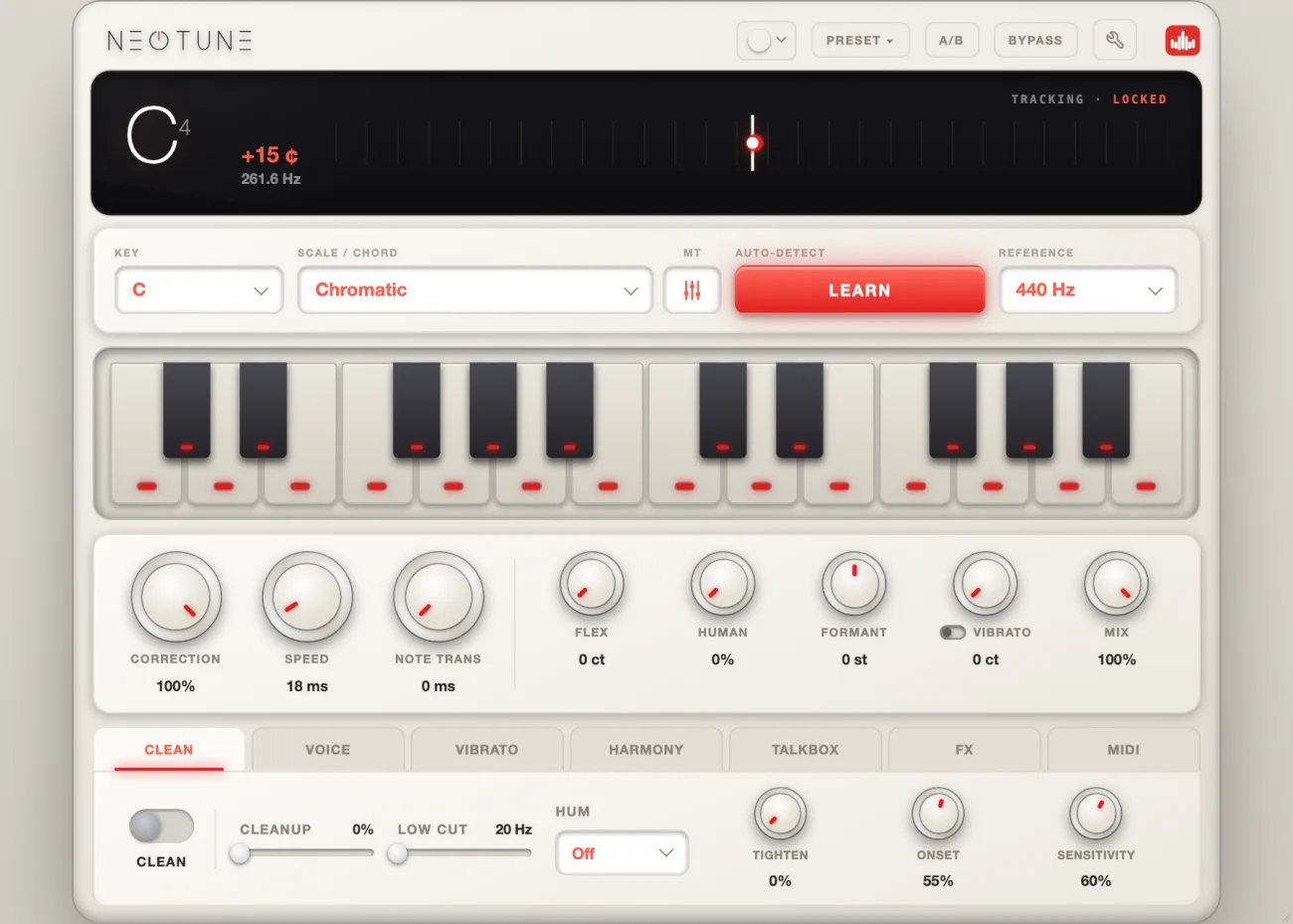
NEOTUNE Pro covers the whole stack in one rack: hard tuning, formant shifting to 12 semitones with six voice models, two scale-aware harmonies, a talkbox and drive and growl. $29.99. See the plugin.
Related: the hard autotune effect, formant shifting explained and vocal harmony plugins.
The post How to Make Hyperpop Vocals appeared first on Producer Sources.